
Stranded Value: Distribution Drought and Zombie Portfolios
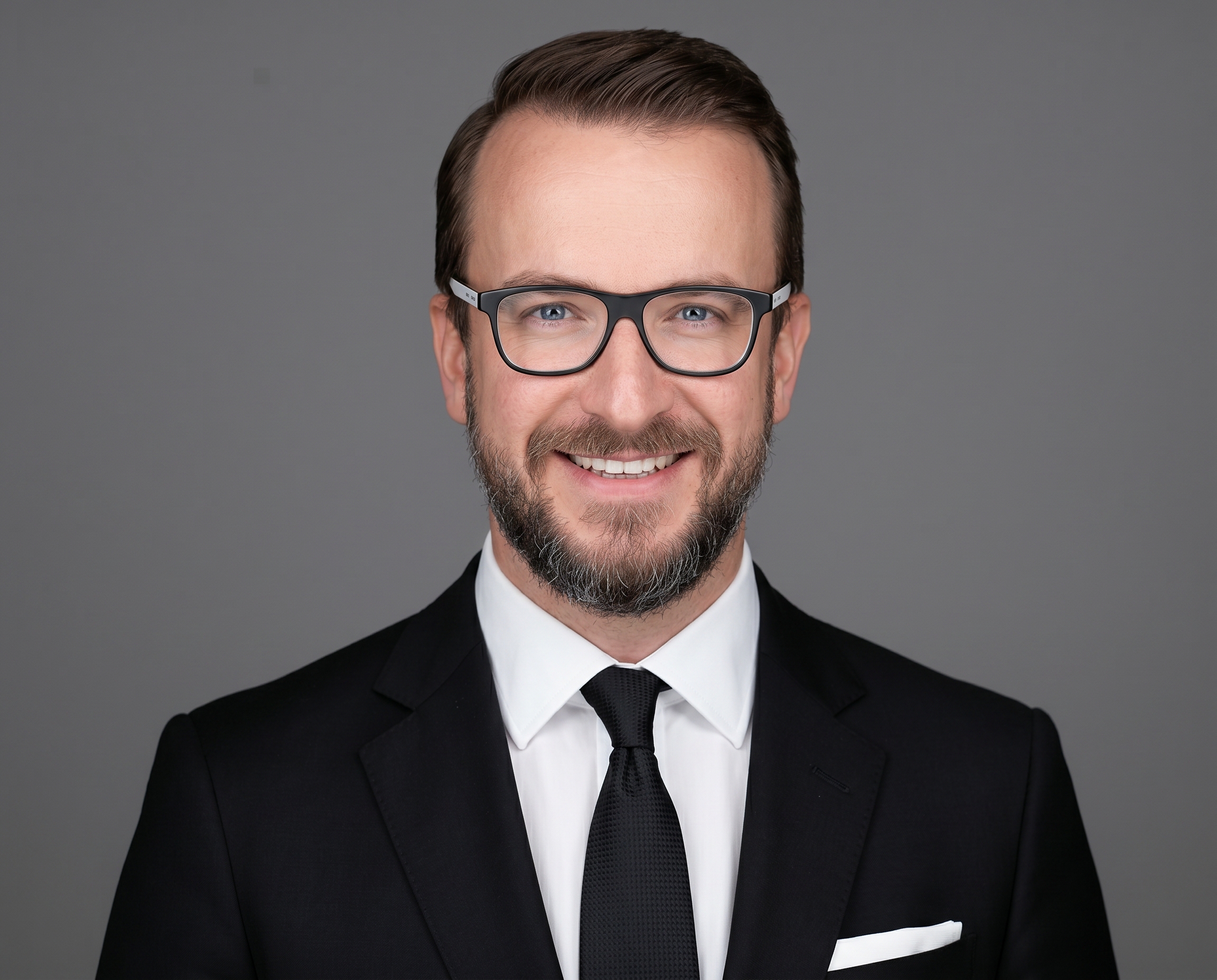
Authored by: Marcus Wolter, Takashi Toyokawa, Robert Meyer, Mason Gregory and Aijo Wu.
Exit markets remain congested: distributions to LPs have run below 15 per cent of NAV for a fourth consecutive year, leaving sound assets trapped in fund structures and on corporate balance sheets.
Continuation vehicles are now the market-standard answer to the duration problem, but the off-the-shelf model fits poorly for mid-market managers, Asian portfolios and holders who are not fund sponsors, such as corporates with unmanaged minority stakes.
Novara Global Capital VCC, a MAS-regulated Singapore umbrella vehicle with segregated sub-funds and a Section 13O tax incentive, provides the platform to warehouse, actively manage and ultimately realise these assets, whether for fund sponsors or corporates.
Two conversations have dominated our client work over the past eighteen months. The first is with fund managers who cannot return capital fast enough. Their portfolios are sound, their companies are growing, but the exit channels that would ordinarily convert paper gains into distributions remain congested, and their investors are losing patience. The second is with corporates like industrial groups, financial institutions, trading houses that hold dozens of minority stakes acquired over a decade of corporate venturing and strategic investing, and that have quietly stopped looking at most of them. The stakes sit on the balance sheet. Nobody owns them internally. The strategy teams that made the investments have moved on to other programmes, and the positions are neither monitored nor managed.
These look like different problems. In substance they are the same problem: assets with genuine residual value, trapped in structures that no longer serve them, absorbing attention and blocking capital. The answer to both issues could be the similar move the assets into a vehicle built to hold them properly, with aligned economics, professional oversight and a realistic time horizon. This piece explains why we built Novara Global Capital VCC to be that vehicle, and what it takes, practically and legally, to move fund interests, continuation assets or orphaned corporate stakes into it, including the governance, regulatory, tax and contractual issues that frequently determine whether such migrations succeed.
The distribution drought is now structural
Bain & Company’s Global Private Equity Report 2026 puts distributions to limited partners below 15 per cent of net asset value for a fourth consecutive year. This is an industry record, and a level last seen in the depths of the global financial crisis. The industry is sitting on roughly 32,000 unsold portfolio companies with an aggregate value of about US$3.8 trillion. Average holding periods at exit are hovering around seven years, up from five to six in the decade to 2021, and almost 40 per cent of all portfolio companies have now been held for more than five years, against 29 per cent in 2019.
The consequences run through the entire fund lifecycle. Recent vintages including every cohort from 2017 to 2021 are underdelivering against historical DPI benchmarks (meaning distributed to paid-in capital - one of the three core performance metrics used in private equity and venture capital). Limited partners, starved of distributions, have less capital to recycle into new commitments, and they are allocating what they do have with a sharper pencil: the funds that closed quickly in 2025 were overwhelmingly those that could evidence both strong returns and consistent distributions. Managers who cannot show DPI face extended fundraising timelines, reduced targets and, at the margin, the inability to raise at all. Bain notes that in ordinary times roughly 15 per cent of fund series fail to re-raise; in stressed periods that figure climbs, and it climbs fastest for managers in the bottom quartiles of DPI performance. The industry has a name for what happens next: the zombie fund, managing out a wasting portfolio with no prospect of a successor vehicle.
Time itself is part of the problem. The same Bain analysis shows that median fund-level total value to paid-in capital begins to flatten after year eight, and IRR (internal rate of return - which prices the time value of money) deteriorates even earlier. Holding an asset longer inside a structure designed for a ten-year life does not preserve value; beyond a certain point it erodes it. Yet selling into a soft market crystallises a discount the manager has spent years trying to avoid.
Continuation vehicles: from workaround to market standard
The market’s principal response has been the continuation vehicle: a new fund, managed by the same sponsor, that acquires one or more assets from the existing fund, giving legacy investors a genuine election between cashing out at a validated price and rolling their exposure into the new vehicle alongside fresh secondary capital. What began a decade ago as a restructuring tool for troubled funds is now a mainstream exit route for prized assets. Jefferies’ secondary market data show GP-led transaction volume exceeding US$47 billion in the first half of 2025 alone, which is a 68 per cent increase year on year, with continuation vehicles accounting for 87 per cent of that volume, and 2025 as a whole setting another record for the secondary market. GCM Grosvenor observes that over 80 per cent of the top 100 global buyout sponsors have accessed the continuation vehicle market. This is no longer an exotic instrument; it is how sophisticated managers solve the duration problem.
Venture capital portfolios face the same bind, and the timing may not be ideal for a direct secondary route. The better execution is to aggregate those positions and bring them into a VCC as a multi-asset continuation vehicle, which could be structured as a portfolio transfer into a dedicated sub-fund that delivers price discovery at the portfolio level, offers incoming secondary capital diversification rather than single-name exposure, and replaces a series of fragile bilateral sale processes with a single, properly governed GP-led transaction.
The governance framework has matured alongside the volumes. ILPA’s guidance on continuation funds sets out the expectations that now define a well-run process: early engagement with the limited partner advisory committee on conflicts, a competitive price-discovery process or independent valuation support, a status quo rollover option that does not impose new economics on electing investors, and a realistic election window. A sponsor who follows that path converts a potential conflict into a liquidity event that both sides can defend.
But the standard continuation model has gaps. It is built around large sponsors, large single assets and the Cayman–Delaware–Luxembourg structuring triangle. For mid-market managers, for Asian portfolios, and above all for holders who are not fund sponsors at all, the off-the-shelf model fits poorly. The fixed costs of a bespoke vehicle are hard to justify for a portfolio of minority positions, and the classic continuation fund presupposes a general partner leading the process. Which brings us to the second, quieter version of the same problem.
The corporate version: zombie minority portfolios
Corporate venturing has reached remarkable scale - more than 3,000 corporations globally made venture investments in 2025 alone, according to Global Corporate Venturing’s 2026 industry review. But scale has brought a long tail. According to data from MIT Sloan, a third of all active corporate venture units were mothballed or shut down over a three year period from 2021 to 2024, and still today a significant number of corporate venture units are currently being restructured, scaled back or wound down as leadership changes, capital budgets tighten and innovation strategies shift, and each wind-down leaves the parent company holding a portfolio that no longer has a natural home. Anthemis, in a recent practitioner framework on harvesting corporate venture portfolios, describes the result precisely: programmes that linger as under-managed legacy assets because the back end of the venture lifecycle was never planned with the same rigour as the front end.
The pattern will be familiar to anyone who has sat on the corporate side. A minority stake is acquired for strategic reasons: access to a technology, a supply relationship, an option on a market. Years later the strategic rationale has lapsed, the sponsoring executive has left, and the business unit that championed the deal has been reorganised twice. The stake persists on the balance sheet not because anyone has decided to keep it, but because no event has forced a decision. Board seats go unfilled, information rights go unexercised, consent requests from the portfolio company sit unanswered, and the annual impairment review is performed on the basis of whatever information happens to arrive. Multiply that by twenty or forty positions and the picture is one we would not accept from any professional investor. Yet, these are real assets, often with real residual value, held by companies whose directors owe the same duties of care over these holdings as over any other corporate asset. Unmonitored is not a defensible steady state. Audit committees increasingly agree. Increasingly, boards are also recognising that these portfolios create governance and oversight issues beyond valuation alone. As institutional knowledge fades, information rights may go unexercised, contractual rights receive less attention than they should, and opportunities to participate in financings, secondary transactions or other liquidity events can be overlooked.
The apparent solutions are all unattractive. Selling into the secondary market works, but corporates confront brutal pricing and lack of deal flow. Industry reporting puts offers for early-stage and illiquid minority positions at discounts of as much as 80 per cent to the last carrying value, and a bulk fire sale carries reputational cost with founders and co-investors the corporate may want to work with again. Managing the portfolio in run-off internally preserves value in theory, but in practice assigns a long-tail administrative burden to teams hired to do strategic work, and the positions decay from neglect. Transferring stakes into business units hands venture assets to operators with no venture experience. What remains are external options: keep the economic exposure, but move the assets to a professional platform whose entire job is to hold, monitor, report on and ultimately realise them.
The Novara Global Capital solution
Novara Global Capital VCC is Novara’s permanent-capital investment platform: a Singapore variable capital company managed under a Monetary Authority of Singapore capital markets services licence, with a mandate spanning public and private special situations and corporate asset structuring. The platform was rebuilt and rebranded from Angsana Merchant Capital VCC, whose original mandate was regulated exposure to exchange-traded commodity futures, precisely so that it could serve as flexible, regulated holding infrastructure for situations like the ones described above. It holds an approved tax incentive under Section 13O of the Singapore Income Tax Act, and it sits inside Novara’s integrated advisory model, which means the legal, strategic and investment banking capabilities that a continuation or warehousing transaction requires are available on the same platform that operates the vehicle. Unlike a traditional fund administrator, law firm or investment bank acting independently, Novara is able to structure, execute, document and operate these transactions through a single integrated platform. That reduces execution risk, avoids fragmented advice and allows commercial, legal and operational decisions to be made together rather than in isolation.
Two design choices matter most. The first is that Novara Global Capital is an umbrella structure: each mandate including continuation of a portfolio for one sponsor or a warehoused minority book for one corporate sits in its own sub-fund, with its own assets, its own investors and its own economics, legally segregated from every other sub-fund. This keeps the overhead low and allows for efficient monitoring and value add. The second is that portfolio monitoring and reporting are automated by design. Novara’s agentic AI workflows accelerate the repeatable substance of portfolio oversight with human judgement coming in at every decision making point. Collecting and normalising portfolio company information, tracking covenant and consent items, maintaining valuation inputs, producing investor-grade quarterly reporting is easier when done on scale; even with every output still being reviewed and signed off by regulated professionals. That matters because the core economic reason zombie portfolios exist is that monitoring is expensive relative to position size. Change the cost of monitoring and the calculus that produced the neglect changes with it. Technology changes the economics of portfolio oversight. The investment judgement that follows remains human. Decisions on whether to support a financing, pursue a secondary sale, exercise governance rights or continue holding an asset are not automated; they are informed by experience. That is where Novara's investment banking, legal and strategy teams work together.
Monitoring, however, is only the first half of the value case. The reason these stakes decay is not simply that no one is watching them; it is that no one is managing them. Behind Novara Global Capital sits our Strategy Advisory practice, built by people who have spent their careers building businesses and investing in venture and growth capital - sourcing rounds, sitting on boards and taking companies through to exit.
That experience is what turns a monitored position into a managed one. It shapes the judgement a portfolio actually needs: which stakes are ready for exit, which need one more financing round to get there, and which are better sold opportunistically than carried indefinitely at a theoretical mark. And because our M&A and fundraising capabilities sit in-house, alongside the legal and strategy functions already embedded in the platform, a sub-fund never has to go outside Novara to run a sale process, negotiate with a buyer or raise the follow-on capital a company needs to reach its next milestone. That coverage even extends to the portfolio companies themselves: the same Novara legal team that structures and documents a transfer can help a portfolio company tighten its governance or paper a financing round.
For corporates this is the crux. Stakes go unmanaged not because they lack value but because nobody internally has the time, mandate or venture-specific transaction experience to act on them. That is the gap Novara closes: the distance between a position that is merely monitored and one that is actively managed toward a realisation.
Why a VCC? Why Singapore?
The variable capital company was introduced under the Variable Capital Companies Act 2018 and launched in January 2020; more than a thousand VCCs and a considerably larger number of sub-funds now sit on the ACRA register across private equity, venture, hedge, real asset and family office strategies. For the two use cases at hand, its features line up with the problem unusually well.
Segregation without proliferation. An umbrella VCC can add sub-funds without incorporating new entities, and each sub-fund’s assets are statutorily ring-fenced: creditors of one sub-fund cannot reach the assets of another, and sub-funds are wound up individually. A sponsor’s continuation portfolio and a corporate’s warehoused stakes can live on the same platform. They are sharing its licence, administration, audit and reporting infrastructure with no commingling of risk. The incremental cost of the next mandate is a sub-fund, not a fund.
Capital flexibility. As the name suggests, a VCC’s capital is variable: shares are issued and redeemed at net asset value without the capital maintenance mechanics of an ordinary company, and distributions can be paid out of capital. For continuation situations, that means rolling investors, new secondary capital and staged realisations can all be accommodated inside one vehicle without court process or capital reduction formalities. For a corporate that has contributed assets, it means proceeds can be distributed as positions are realised, rather than waiting for a terminal liquidation.
Confidentiality with regulation. The register of shareholders of a VCC is not public - it is available to regulators and supervisory authorities but not to competitors, counterparties or the press. For a corporate moving a legacy book off its own name, that discretion is frequently a threshold requirement. At the same time, every VCC must be managed by an MAS-licensed or regulated fund manager and is subject to anti-money-laundering supervision, so the discretion comes wrapped in institutional-grade oversight rather than offshore opacity.
Inward re-domiciliation. The framework expressly permits foreign corporate funds to re-domicile into Singapore as a VCC, preserving track record and investor base. An existing offshore continuation or holding vehicle need not be unwound to benefit from the regime; it can move.
The tax position. A VCC is treated as a single company for tax purposes, files one return, and where it holds an award under Section 13O (or, for larger platforms, Section 13U) enjoys exemption from Singapore tax on specified income from designated investments, a category broad enough to cover the securities, fund interests and private company shares relevant here. The exemption travels with related benefits: withholding tax exemption on qualifying payments to non-resident lenders and GST remission on fund expenses. Following the October 2024 MAS revisions, the 13O scheme requires S$5 million in designated investments and tiered local business spending, with the former restriction that an incentivised fund be newly incorporated removed and the requirement to invest within an MAS pre-approved strategy abolished. These are both changes that materially ease the migration of existing assets into an incentivised vehicle. But S$5 million is a floor, not a ceiling: it is the threshold to qualify for 13O, not a limit on what the platform can hold, and the umbrella carries a single award that all of its sub-funds share. Because the assets of those ring-fenced sub-funds count together toward the qualifying threshold, the platform can migrate the whole structure to the S$50 million Enhanced Tier incentive under Section 13U as the book grows which allows it to gain that regime’s wider latitude on vehicle type and investor base while the underlying exemption stays the same. Closed-ended funds may elect a treatment under which the asset test applies only in the early incentive years, an accommodation plainly designed with realising portfolios in mind. The schemes have been extended through to end-2029, and as a Singapore tax resident the VCC has access to the Republic’s network of more than ninety double taxation agreements; which is relevant whenever the underlying portfolio pays dividends or interest across borders.
Add to this Singapore’s more general credentials: a neutral, creditor-respecting legal system, political stability, regulators that actually want to be helpful, the region’s deepest fund services bench, and a time zone that actually matches where much of the trapped value sits. The case for warehousing Asian and cross-border portfolios here rather than in the Caribbean becomes difficult to argue against.
What it takes to move assets in
None of this is theoretical, but nor is it trivial. Migration is a transaction, and it should be run like one. For directors, general partners and investment committees, the decision to migrate assets is itself a fiduciary decision requiring careful consideration of valuation, conflicts of interest, stakeholder fairness and the rationale for the proposed structure. The mechanics differ depending on who is moving what.
For fund sponsors, the classic route is a continuation transaction into a dedicated sub-fund. The sponsor and Novara agree the perimeter whether it is a single asset, a strip, or the tail of a fund and the sub-fund acquires it under a sale and purchase agreement, funded by rolling investors and any new capital. Run properly, the process tracks the ILPA playbook: the conflict is taken to the LPAC early; price is validated through a competitive process, an independent valuation or a fairness opinion; existing investors receive a genuine election between liquidity and rollover on substantially their existing economics; and the election window is long enough to be real. Where the existing vehicle is itself a corporate fund, re-domiciliation into the VCC or a contribution of the entire portfolio in exchange for sub-fund shares can substitute for an asset-by-asset transfer. Sponsors should budget for the unglamorous workstreams: transfer restrictions and change-of-control provisions in underlying shareholder, constitutional and financing documents, counterparty consents, regulatory approvals where applicable and the tax analysis of the transfer step in each asset’s jurisdiction, including transfer taxes where they bite (Singapore itself imposes stamp duty at 0.2 per cent on transfers of shares in Singapore-incorporated companies; other jurisdictions have their own equivalents).
For corporates, the transaction is simpler in governance terms: there is no LP conflict to manage, but demands more preparatory work, because the portfolio has usually not been maintained to transaction standard. The sequence we run has four stages. First, triage and valuation: an asset-by-asset review distinguishing positions worth warehousing from positions worth writing off or selling immediately, supported by an independent valuation so that the corporate’s board has a defensible record for the transfer price. Second, structuring: the corporate typically contributes the retained stakes to a dedicated sub-fund in specie, receiving sub-fund shares in exchange. It keeps the economic exposure and upside, moves the monitoring burden to the platform, and converts an unmanaged scatter of direct holdings into a single, professionally reported fund position. Outright sales, deferred consideration and hybrid structures are equally available where the objective is exit rather than warehousing. Third, execution: satisfying rights of first refusal, co-sale and consent provisions in each underlying shareholders’ agreement, obtaining board and, where relevant, regulatory approvals, and completing the platform’s investor onboarding and AML checks. Fourth, operation: from completion, the sub-fund monitors the positions, exercises the information and governance rights that had gone dormant, produces quarterly reporting the corporate can put in front of its audit committee, and works each position toward a sensible realisation with the corporate retaining, where it wishes, agreed strategic rights such as information access or a right of first offer on assets that regain relevance.
Accounting treatment deserves early attention in either case: derecognition, deconsolidation and the measurement of the retained fund interest should be agreed with the auditors before signing, not after. And in both cases the offering and constitutional documents do real work: the sub-fund’s terms set the management economics, the realisation horizon, the distribution waterfall and the governance rights of the contributing investor, and they should be negotiated with the same care as any fund commitment.
Parked is not abandoned
The language of “parking” assets undersells what is actually happening. A stake that moves into a properly run VCC sub-fund is not being abandoned; for the first time in years, it is being watched. Fiduciary obligations that were being discharged nominally are discharged in substance. Value that was decaying through inattention gets an owner whose economics depend on realising it. And the original holder exchanges an illiquid, unmonitored, administratively burdensome direct position for a clean interest in a regulated Singapore vehicle with tax certainty to the end of the decade.
The liquidity drought will eventually ease; exit markets always reopen. But the structural lesson of the past four years will remain: portfolios need somewhere to live between the end of one ownership story and the beginning of the next. We built Novara Global Capital to be that place. Because continuation and warehousing transactions are rarely constrained by capital alone. More often they require fund structuring, legal execution, transaction management and active portfolio oversight to work together. That is the gap Novara was built to fill. If your fund has assets that deserve more time than your fund documents allow, or your balance sheet carries stakes that nobody has looked at since the strategy changed, the conversation is usually shorter than you expect and considerably shorter than another year of doing nothing. Thought Leadership
This article is provided for general information only. It does not constitute legal, tax or investment advice, and no investment decision or transaction should be undertaken on the basis of it without specific professional advice. Nothing in this article is an offer of securities or fund interests in any jurisdiction.
Sources
Bain & Company, Global Private Equity Report 2026 (distributions as a share of NAV; unsold company inventory and value; holding periods; vintage DPI performance; re-raise rates; TVPI/IRR duration analysis).
Jefferies, Global Secondary Market Review (H1 2025 and full-year 2025 editions) (GP-led volumes; continuation vehicle share).
GCM Grosvenor, The GP-Led Continuation Vehicle Market (May 2026) (sponsor adoption of continuation vehicles).
MIT Sloan Management Review, Steer Clear of Corporate Venture Capital Pitfalls (March 2024
ILPA, Continuation Funds: Considerations for Limited Partners and General Partners (guidance on process, conflicts and rollover elections).
Anthemis, Harvesting CVC Portfolios: A Practical Framework for Corporate Investors (January 2026), citing Global Corporate Venturing, The World of Corporate Venturing 2026 (number of active corporate venture investors; exit pathways).
Global Venturing (secondary market pricing for corporate venture portfolios).
MAS Circular FDD Cir 10/2024, Tax Incentive Schemes for Funds, as summarised in PwC Singapore, Changes to the Singapore fund tax incentive schemes (October 2024); IRAS e-Tax Guide, Tax Framework for Variable Capital Companies.
Variable Capital Companies Act 2018; ACRA, Variable Capital Companies (framework and register).


Comments